
Raising the Mothers
On Rehearsing Loss, Returning to Joy, and the Art of Beginning Again

Dear Friends,
As I continue working on my ancestor memoir-in-progress, [re]member the world, I find myself thinking about the mothers who raised us, the foremothers whose stories were never told, and the parts of ourselves still waiting to be born.
Lately I’ve been returning to an essay I first drafted around Mother’s Day. Revisiting it now, I realize it isn’t really about a holiday. It’s about the lifelong work of becoming—and helping others become—who they are meant to be.
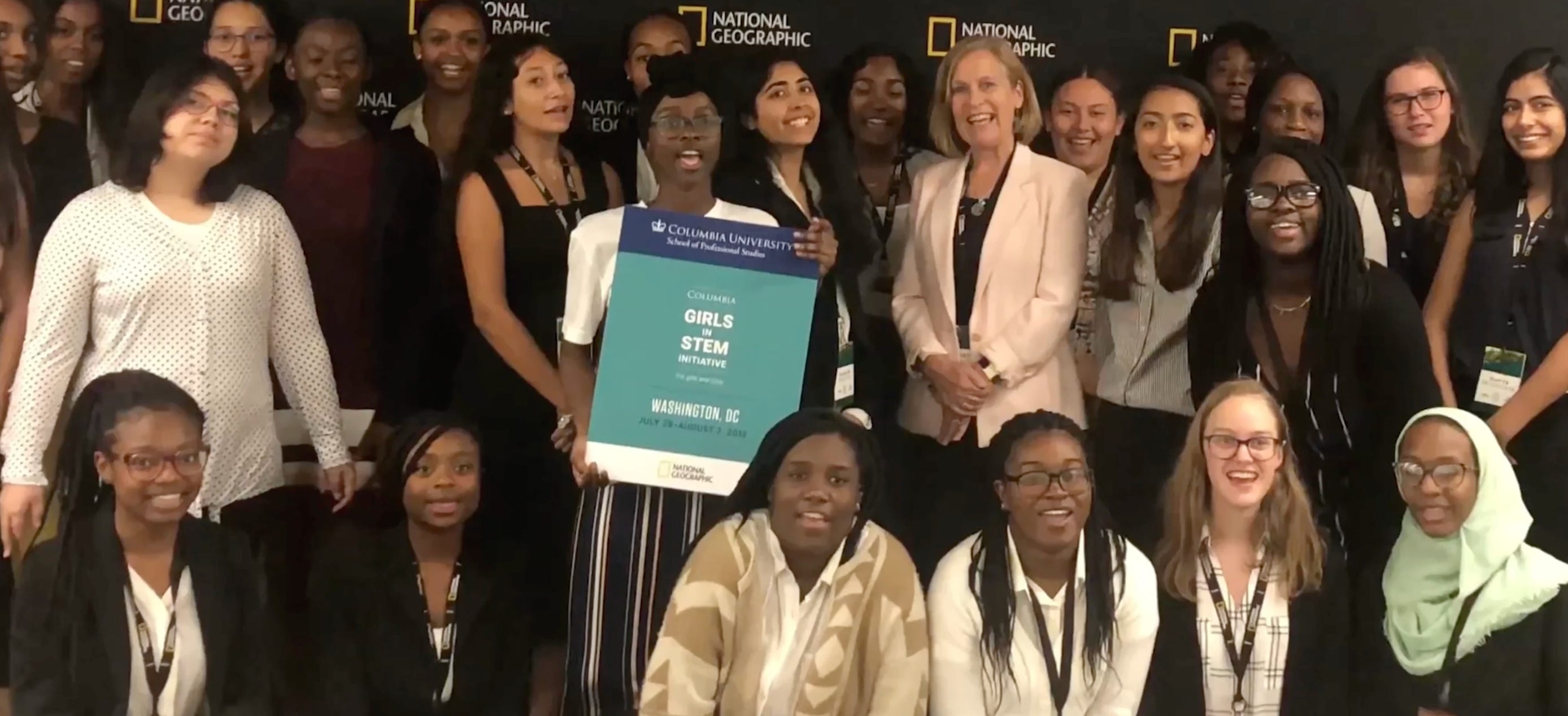
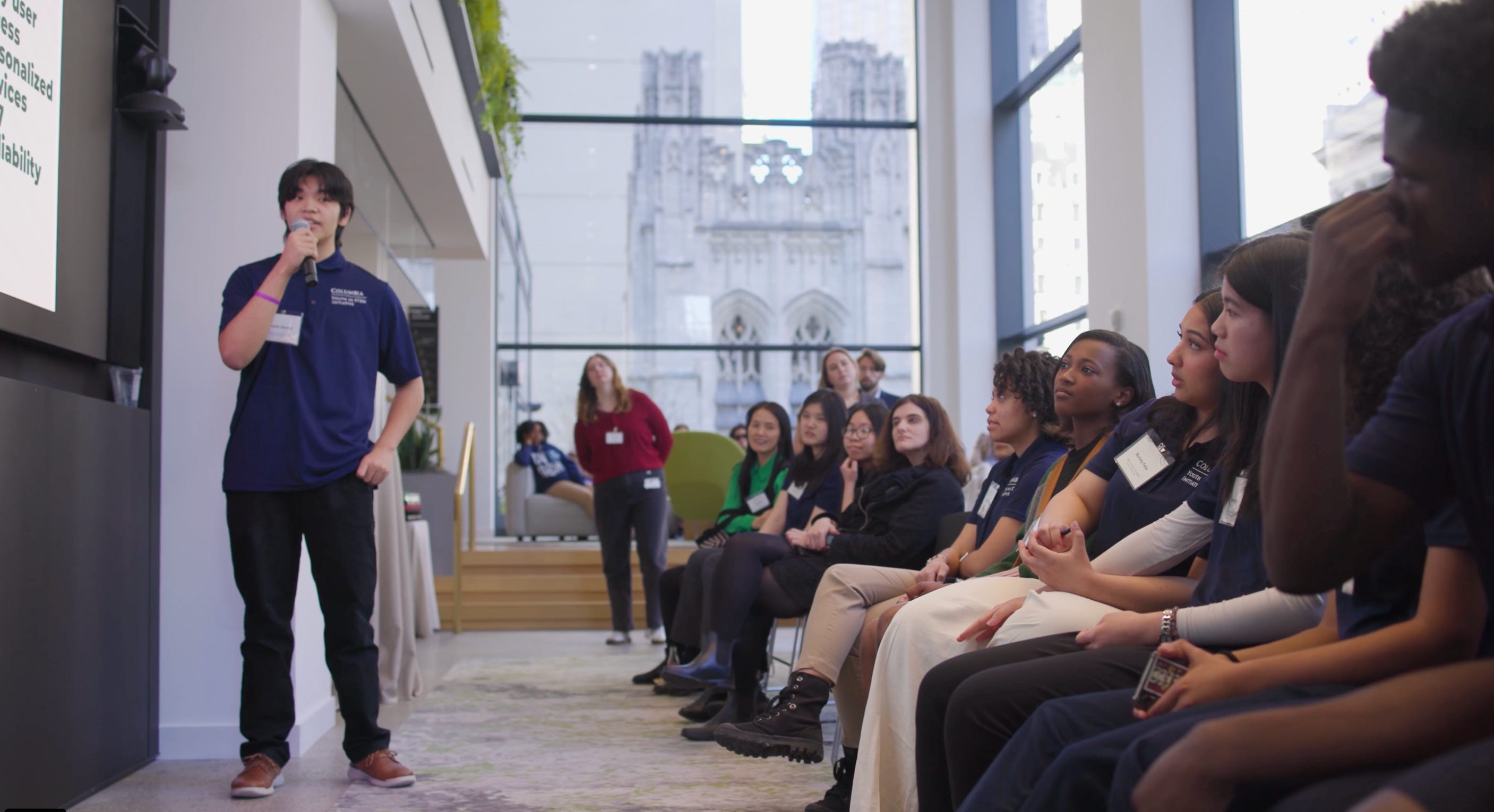
In a glistening midtown Manhattan skyscraper one bright spring morning a year ago, I sit in a meeting hall filled with young people who could be my own children—or, in some dimension, my former selves. They are students, scientists, storytellers, dreamers.
I am there as a mentor in Columbia University’s Youth in STEM program, invited to speak about possibility, though I know that what I really want to tell them is something more elusive: how possibility is never finished. How each time we believe we have outlived our purpose, life finds another way to call us back onstage.
Watching these bright young high school students, as I have for so many years now, I sense the nervous hum of rehearsal—the same nervous energy that used to course through me before the curtain rose. They will be pitching a startup later in the day—a business plan they’ve been working on all year—to a panel of seasoned professionals, me included. We have rubrics for evaluation, firm criteria for choosing, and a tough task ahead: recognizing one team out of twelve total for all-round excellence.
It is their first act.
The first act of my life played in earnest: eager student, striving professional, wife, mother. Then came Act Two: unraveling, heartbreak, reconstruction of what remained.
And now, in this, my Third Act, I am learning how to play the roles I once only imagined—mentor, witness, midwife of story.
Decades ago, I’d walked into a small community theater certain I no longer belonged. It had been decades since I’d last acted on stage. Auditioning for “Hay Fever,” I felt the old energy surge through me: knees quaking; voice quivering. British playwright Noel Coward’s witty, stinging lines lifting from the diaphragm, passing through lips, teeth, and tongue. His dialog landing with the precision of an arrow, unlocking the memory of other stages, other auditions, something that made me persist—some lost girl who once believed in the alchemy that happens when you embody someone else’s words, making them yours.
Our leading lady, Jane, entered rehearsals late—she was playing My Fair Lady across town. A seasoned actress, effortlessly elegant, she seemed to possess everything I had forfeited—grace, certainty, command. I feared her and wanted to be her, which may be the same thing.
Instead of rivalry, she offered curiosity. Between scenes, she would ask about my life as if I were worth knowing. Gradually, our stories began to reveal a palimpsest of rewritten scripts: we had followed similar arcs in political work, in higher education, in television.
“We’ve lived parallel lives,” she laughed one day, and I felt as if we had rehearsed these parts across lifetimes.
That play became a hinge between what was past and what could still be. Onstage, I embraced again the pulse of creative life—the one I had put aside while raising children, holding together a marriage frayed, work that prioritized productivity over passion. I began to raise something older and deeper: the woman who had been waiting in the wings.
It took more years—a new stage—to hear my wider calling. After the theatre came authoring a science fiction book series for young adults, and after writing came the question of why I was writing, and for whom.
I began to listen again to the whispers of women’s stories, starting with my grandmother’s—Sophie, the Ukrainian-Jewish immigrant whose migration trauma was silenced before she ever set foot in America. Her absence began to speak through me, a blank page where a lineage should have been, filling with the difficult story of a difficult migration from Old World to New.
Through my work on Releasing Memory and [re]member the world, I started to sense that what I was really doing was raising the mothers: giving voice to the generations who had been erased, buried, or forgotten.
The act of telling their stories became an act of self-creation. Each poem, each letter, each performance was a breath returning to a body that thought it had expired. I realized that the mothers we think we raise—the daughters we imagine we become—are all part of the same continuum of care. To mentor, to mother, to make art: each is a gesture of faith in the future.
Raising the mothers, I was beginning to understand, was never only about mothers. It was about anyone entrusted with another person’s becoming.
That understanding deepened when I began mentoring young people in STEM and the arts. I saw in their ambition a joy—brilliant, impatient, afraid of failing. They could embrace many things at once. Each time I encouraged one to claim her creative voice, I felt another layer of my own hesitation peel away.
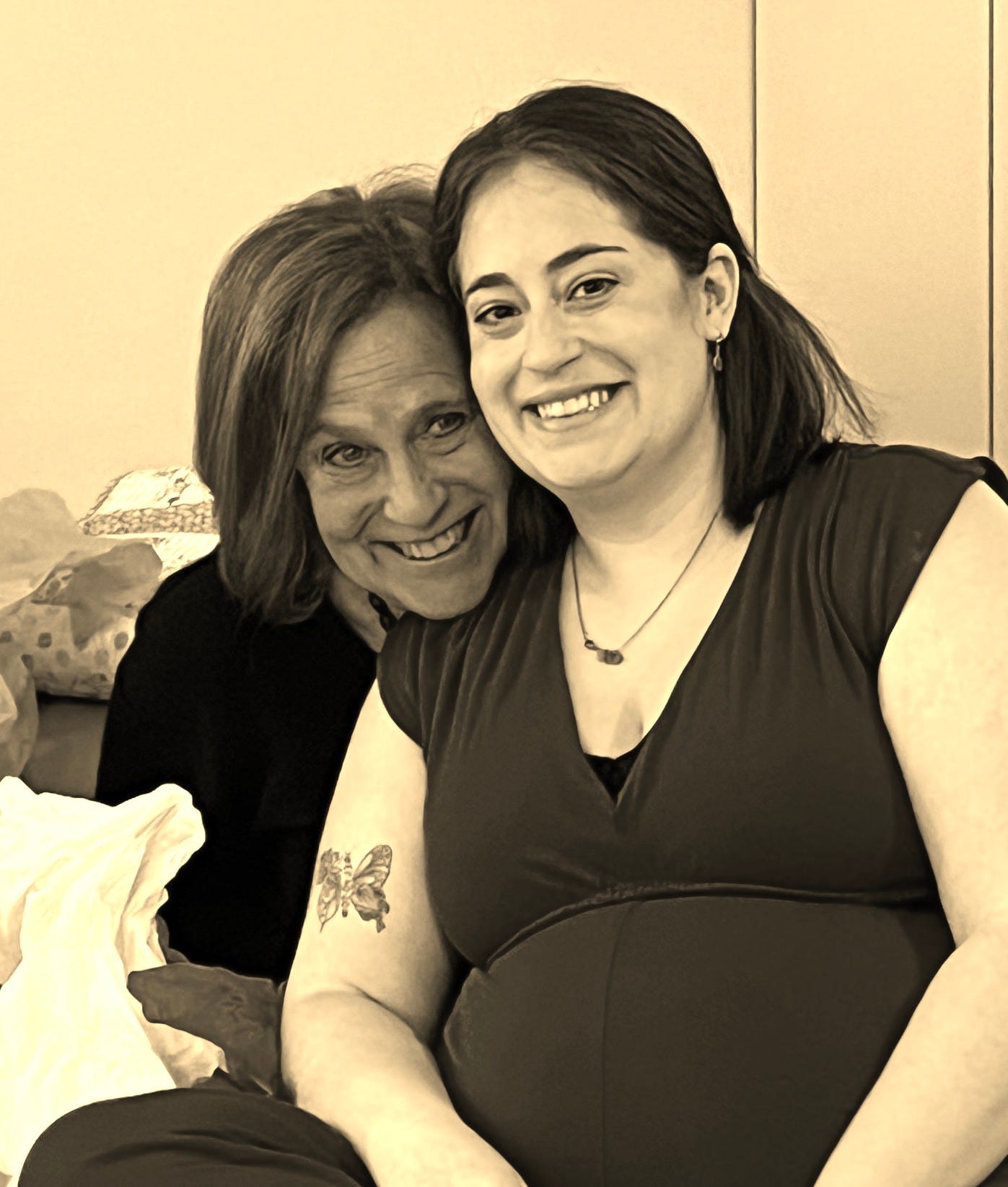
This year, on the eve of becoming a grandmother for the third time, I find myself savoring both motherhood and grandmothership. We are gathered around my daughter and her husband, part of the support system for TEAM P—soon to become a big sister.
We form a living family constellation, unfolding and enfolding across generations.
We live in a culture that rewards beginnings but mistrusts continuations. Yet I have learned that life’s deepest artistry lies in returning enlarged by experience. The mother whose silenced dreams can now emerge. The actress who forgot her lines can still find her voice. The daughter who mourned the silence of her foremothers can still learn to listen.
In that sense, the Third Act is not a coda but a crescendo. It is the place where the separate melodies of our lives—career, family, heartbreak, artistry—find harmony. It’s where the personal becomes collective, where one woman’s story of survival becomes a song for many.

Back in that Manhattan meeting room, a student lingers after my talk. A young person in transition between what the world sees and what they want to become confides a passion for astrophysics, a career in the Space Force, and poetry. A young person bound by ancestral expectations, yet torn in body, mind, and spirit to carve out a new path.
The world echoes their parents’ advice: choose the sure thing. Follow tradition.
“Do you agree?” I ask.
A hesitation, a smile. “Maybe not.”
We stand together at a window on the twenty-first floor overlooking the city and for a moment it feels like rehearsal again—the curtain just about to rise.
“Listen to what is calling you,” I urge. “The world needs every voice you have.”
Many voices ring out. I think of Jane. I think of Sophie. I think of my granddaughters. I think of all the women whose stories thread through mine, unseen but alive beneath the surface.
And I understand: raising the mothers was never about going back. It is about tending what remains—these invisible mycelial roots of memory and imagination—so that the next generation can bloom taller, wilder, freer.
The curtain never truly falls. We only learn, with time, how to step once more into the light.
To learn more about the Youth in STEM program, I invite you to read “Time Travel Tourism.”

Robin, what an incredible legacy you are leaving in the world. What could be more important that "raising the mothers." I love that you are standing as a beacon of light for all these young women and urging them to listen to their calling. I am so moved reading "And I understand: raising the mothers was never about going back. It is about tending what remains—these invisible mycelial roots of memory and imagination—so that the next generation can bloom taller, wilder, freer."--thank you for galvanizing here what so many of us as writers and teachers want to do for our students, for our readers, our friends. We want the next generation to remember and to bloom. What a beautiful credo here Robin, thank you!
"I know that what I really want to tell them is something more elusive: how possibility is never finished. How each time we believe we have outlived our purpose, life finds another way to call us back onstage."
So uplifting, Robin. Your essay is for any of us, no matter our stage of life. I always say, "Creativity is ageless." It's wonderful to see different generations coming together in that spirit.