
From Casting Away to Drawing Forth
Water's sacred code, an accord with the heavens

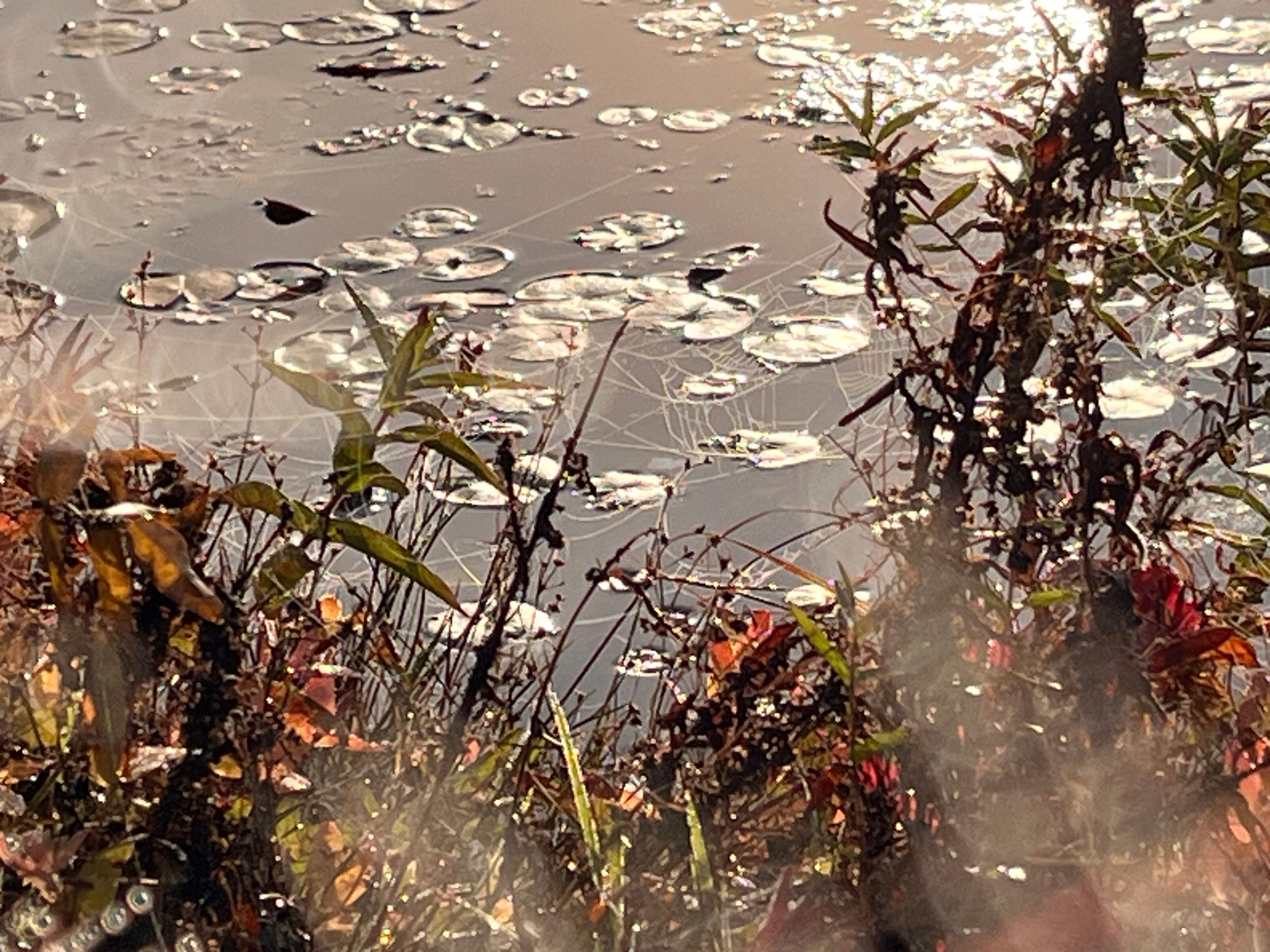
Over the eight nights of the Jewish holiday of Sukkot, the Festival of Booths that marks the early autumn harvest, I continue to divine messages for the new year, 5786.
Once again, I find myself pulled to the wisdom of the ancient texts—not their verbatim meaning, a subject too far from my understanding—but the codes of life. This is part of a continuing series tapping into Torah, DNA, and the Living Flow of Renewal.
In an earlier post, it was the mystery of Torah, the magnetic draw of the Hebrew letters, black ink on white scroll, and DNA, the unique living code in all of us, that captivated me.
This time, I am drawn to the cleansing and clearing, the purification of the waters.
“You will cast all their sins into the depths of the sea.” — Micah 7:19
At Rosh Hashanah, we cast our burdens into the waters.
At Sukkot, we draw the waters up again.
Between these two holy days flows a single current—the current of release and renewal.
During Tashlich, we stand at the edge of a river or lake or sea, letting the waters receive what our hearts no longer can. We whisper prayers and scatter crumbs—symbols of the husks we shed at the threshold of a new year. As the prophet Micah promises, the Divine will cast all our sins into the depths of the sea.
This is no mere gesture. It is an act of physics and faith, of consciousness aligning with flow.
The waters remember. They absorb our pain, our mistakes, our small griefs, transmuting them through movement. They do not judge; they transform.
And then, a few weeks later, the cycle continues.
At Sukkot, the Festival of Booths, we come to water again—not to let go, but to draw in.
In ancient Jerusalem, the Water Libation Ceremony (nisukh ha-mayim) took place each morning of the festival. Priests would descend to the Pool of Siloam, fill a golden flask, and bring it joyfully to the altar to pour before the Holy One. This act was both prayer and partnership: a recognition that life depends on rain, that the next year’s harvests and the world’s balance rely on divine flow.
The sages said of that ceremony:
“One who has not seen the joy of the water-drawing has never seen joy in his life.” (Mishnah Sukkah 5:1)
Why such joy?
Because to draw water was to draw spirit.
To pour it back upon the altar was to complete the circuit of creation.
To dance in the streets was to remember that we ourselves are mostly water—that we, too, are living vessels of mayim chayim, the waters of life.
From Tashlich to Sukkot, we move from casting away to drawing forth.
First we release the stagnant waters—a year’s emotional residue. Then we invite the new waters—fertile, flowing, creative. The Jewish year begins not with fire or trumpet alone, but with water in motion.
In this, Torah and Nature agree: nothing is wasted; everything transforms.
Water cycles endlessly—from ocean to cloud to rain to river to sea again.
Our tears and our sweat, our prayers and our rivers—each participates in the same divine flow.
Mystics teach that when the Spirit of God hovered over the face of the waters at the start of Creation, the waters mirrored the face of God. Creation gazed upon itself. Perhaps each act of reflection, release, and renewal we perform in these sacred days is part of that same moment of recognition—each ripple in the river a wave of divine remembrance.
And so, as we celebrate this Sukkot, a time of harvest and rejoicing, may we also bless the waters—those that flow around us and those that flow within us.
Blessing for the Waters
May the rains return in time.
May the parched earth drink deeply and rise green once more.
May the rivers be cleansed of all we have cast away.
May our tears be received as offerings, our breath as prayer, our joy as renewal.
May we remember that in every drop, the face of the Divine reflects the image of creation and that we are part of that reflection.
L’chaim! To life, to flow, and to the waters that remember.
Each Year, a Return
In the beginning, ruach Elohim—the Spirit of God—hovered over the face of the waters. The waters shimmered like a mirror, reflecting the hidden Face of the Divine. All potential rested there, formless yet alive, waiting to be spoken into being.
When we came to the river on Rosh Hashanah, breadcrumbs in hand, we were not only remembering a verse from Micah. We were standing at that same primordial edge where creation begins. We hover. Our breath trembles over the face of the waters, as the breath of God once did.
The sages said: “You will cast all their sins into the depths of the sea.” (Micah 7:19). But what are sins if not misalignments of flow—places in the body, the heart, the collective where the waters have become dammed, stagnant, or polluted?
And so, we released them. We dropped crumbs—symbols of mistakes, burdens, and missed marks—into the current. And as they touched the surface, water remembered. For the waters of the world are not inert; they are the first living code, the matrix in which all life swims.
Science, too, begins to whisper what Torah has always sung: water holds memory. Its fourth state—the gel that pulses within every cell—holds patterns, responds to words and prayers, carries intention.
When we cast our offerings, the waters do not forget; they transmute. They bear our fragments into the depths of potential, where form dissolves into quantum possibility.
Thus water is not only absolution; it is reprogramming. Each drop is an old code rewritten. Each prayer, a new signal sent into the river of creation.
And if all waters are connected—as science affirms, as mystics have always known—then what we release into one stream ripples outward to oceans, glaciers, clouds, and rain. The whole planet drinks our intention.
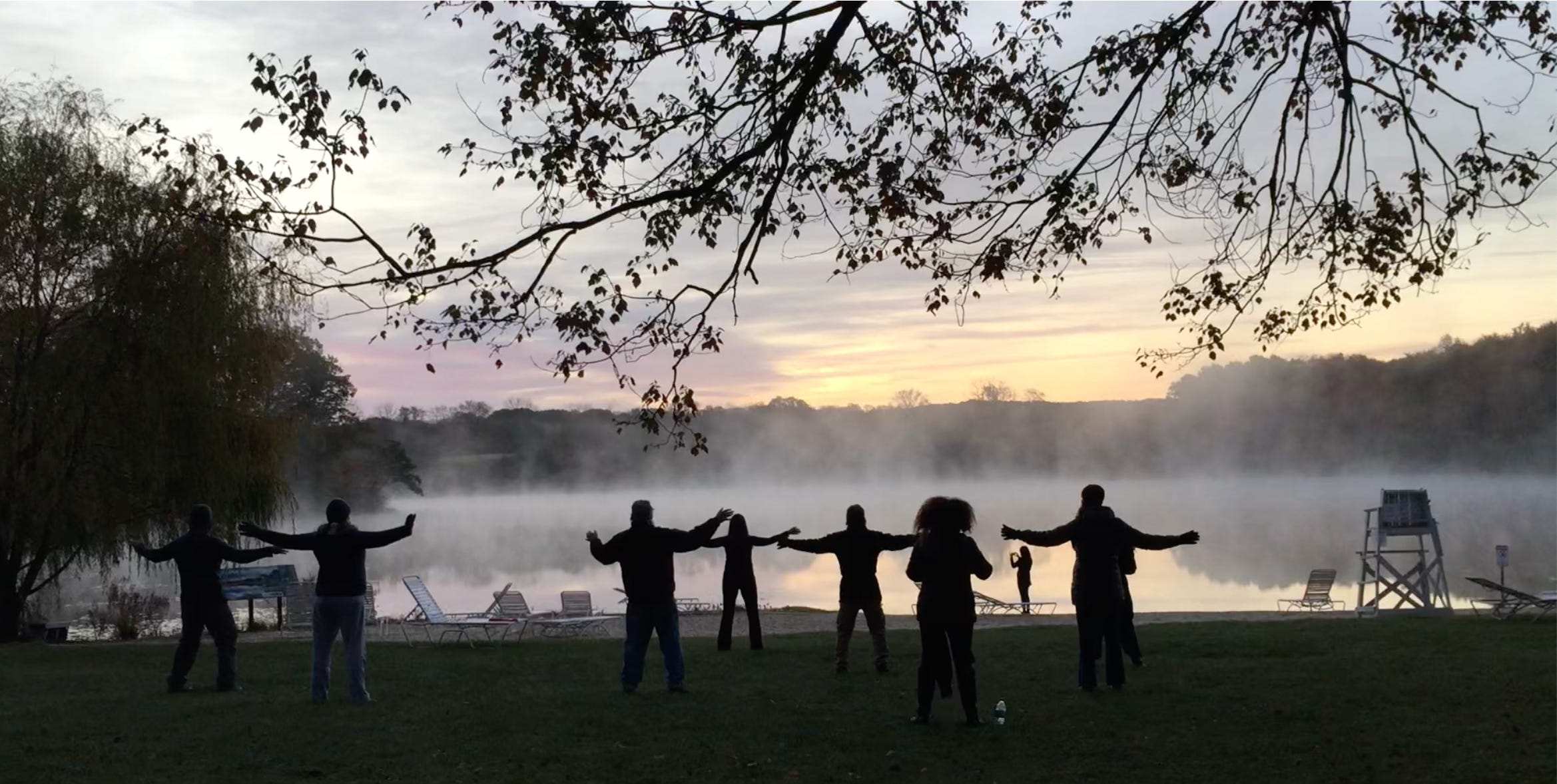
Standing at the shore, we cast not only personal failings but also collective ones: pollution, indifference, heedlessness. Into the depths we send them, trusting the waters to remember, reconfigure, and return to us as life renewed.
The Hebrew word hashamayim (הַשָּׁמַיִם), the heavens, is born of mayim (מַיִם), water—reminding us of the second day of Creation, when the Holy One drew a boundary between the waters above and the waters below. The sages say this was the only day the Torah does not call “good,” for separation is a wound in the body of the One. Yet in this parting, the longing for reunion began. When we cast our crumbs upon the waters at Tashlich, we return what is heavy to the current, entrusting our sorrows to flow back towards the Source from which all life—like rain—returns renewed.
And just as we release into the waters at Tashlich, so at Sukkot we call the waters home.
Through the ancient rite of nisukh ha-mayim—the water-drawing—we welcome back the rains of blessing, praying that heaven and earth be reconciled in due season.
The joy of drawing water at Sukkot celebrates this return, when the waters above and the waters below meet again, and the world drinks deeply of divine remembrance.
In a time of parched ground and restless skies, may we bless the waters to remember us, too—carrying our prayers for renewal into the rivers of creation.
In this way, the span between Tashlich and Sukkot is Torah written not on parchment, but on the still face of the waters rising heavenward in the cool mist of morning. It is DNA remembering its origin in the sea. It is quantum wave collapsing into form through human breath and prayer. A mirror for us to glimpse the face of the heavens. To see ourselves.
For in the beginning, God separated the waters above from the waters below, and did not say, “It was good.” Some say it was because the separation was never meant to be final. Heaven and Earth have always longed to reunite, to remember themselves as one continuous living flow. Each act of release, each prayer for rain, each tear shed in faith—these are the ways the rift begins to heal.
The way we return to wholeness. To Tikkun Olam.
And soon, as the waters of Sukkot settle into stillness, the scroll itself begins to turn. Simchat Torah—rejoicing in the Torah—completes the spiral and begins it anew, as if the universe were breathing in and out through sacred letters. The end is never the end; it is a folding of light back into itself. DNA, Torah, quantum wave—all are living scripts of creation, written and rewritten in every cell, every star, every act of becoming.
As the nights lengthen, we turn inward, carrying the light of this joy within. What was scattered upon the waters now returns as wisdom in the heart. The dance continues—above and below, heaven and mayim—each cycle remembering itself through us.
It is planetary consciousness, awakened through ritual, singing:
All life is One. What you release, we all release. What you renew, we all renew. Let the waters carry it.
Let creation begin again.
May the heavenly waters bring the much needed regeneration through their currents of release and renewal!
Thank you so much for sharing this beautiful ritual, Robin. 🙏 💗
"In a time of parched ground and restless skies, may we bless the waters to remember us, too—carrying our prayers for renewal into the rivers of creation." So much beauty in this act of blessing the waters and praying for renewal. Thank you for sharing these sacred rituals, Robin. As always, I feel the spirit of unity in your messages. This piece reminds me of the work of Masaru Emoto, The Hidden Messages in Water. I wonder what you think of that book. Wishing you joy.